
2026-09-17 ·
Attic Mold Found During a Home Inspection: What Happens Next?
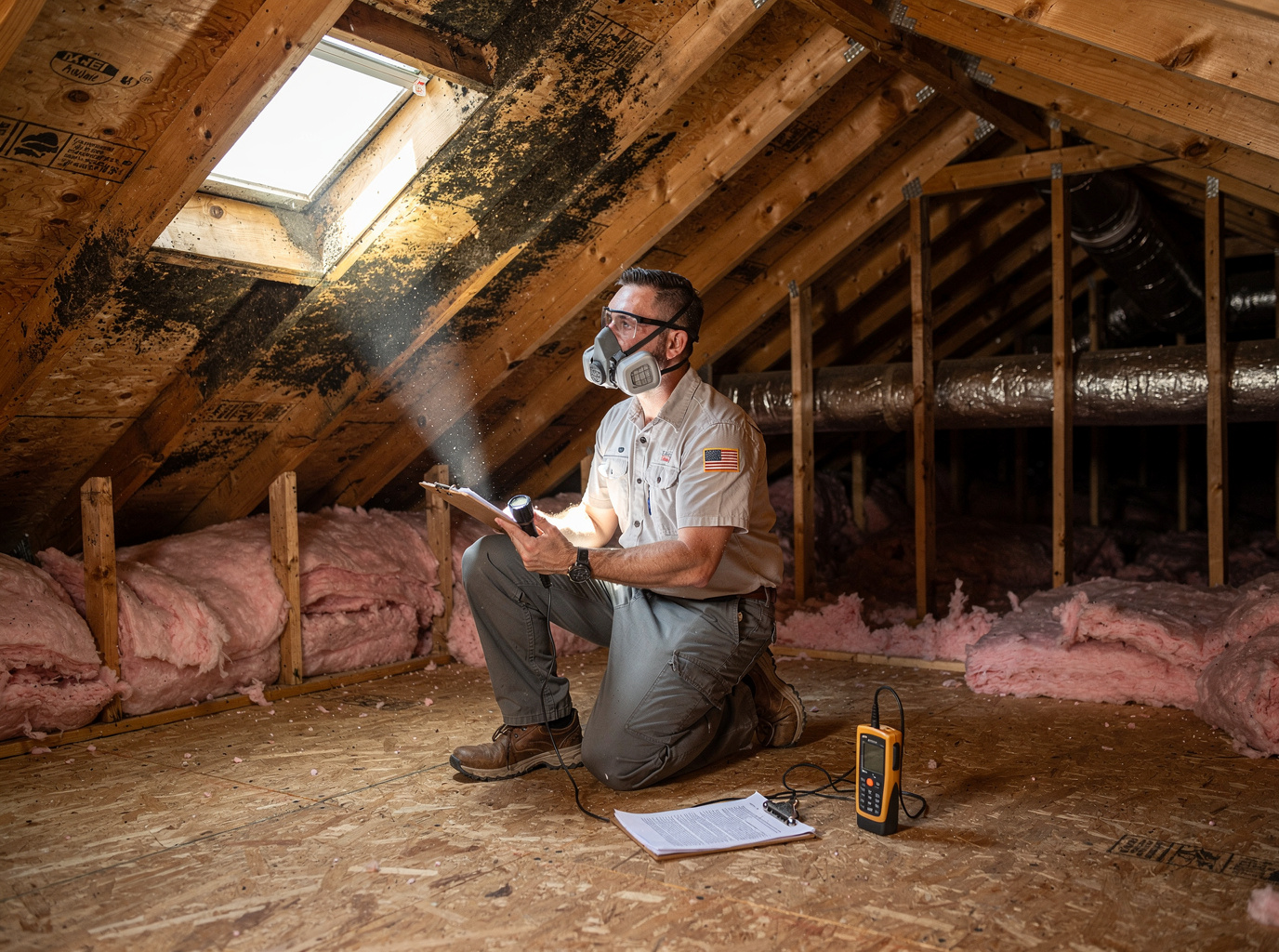
When attic mold appears in a home inspection report for a Palm Coast property, the immediate next step is a detailed assessment of the affected area and its moisture source, followed by containment and removal that typically spans 3-7 days depending on square footage and access. Homeowners in Flagler County often see delays in closings until the issue is resolved, especially in older stock common to Indian Trails and Matanzas Woods where ventilation gaps allow humid air to linger.
Assessing the Mold and Moisture Source
A professional inspection starts with mapping visible growth on sheathing or rafters and testing insulation for saturation. In Palm Coast's humid subtropical climate, with hot summers and mild winters, condensation from poor airflow often drives the problem more than direct leaks. Homes near Washington Oaks Gardens State Park or Flagler Beach see similar patterns due to salt air and steady moisture. Technicians check bathroom exhausts, ridge vents, and soffits to pinpoint why mold established itself. Once the source is isolated, the scope expands to any hidden sections behind insulation. This phase prevents recurrence that could affect resale value in nearby Daytona Beach or St. Augustine markets.
How Local Climate and Housing Stock Affect the Job
Palm Coast attics in neighborhoods like Palm Harbor trap humidity because many single-story homes built before 2000 have limited ridge venting. Hot summer temperatures push warm moist air upward, where it cools against the roof deck and forms condensation on cooler nights. Mild winters reduce natural drying, letting spores spread across 200-400 square feet before detection during inspections. Soil conditions near Matanzas Woods add groundwater influence on crawl spaces that can migrate upward. These factors mean remediation crews must focus on both removal and ventilation upgrades rather than surface cleaning alone.
Remediation Steps Tailored to Inspection Findings
After assessment, crews establish containment with plastic sheeting and negative air machines to protect living spaces. They remove and dispose of contaminated insulation, then clean roof sheathing and rafters using HEPA vacuums and antimicrobial treatments. In cases tied to roof leaks, additional drying time is required before reinstalling materials. Attic Mold Remediation for Home Sales & Inspection Findings outlines the exact sequence buyers and sellers follow to meet lender requirements. Final clearance testing confirms spore levels match outdoor baselines before the home can proceed to closing.
Preventing Recurrence in Flagler County Homes
Post-remediation, addressing ventilation gaps and redirecting exhaust fans becomes critical. Many Palm Coast properties benefit from adding powered attic ventilators sized at 1 CFM per 150 square feet of attic floor. Linking to What Causes Attic Mold in Palm Coast Homes? helps owners understand how daily humidity cycles contribute. Regular checks every 8-12 months catch early growth before the next inspection cycle. Properties in Indian Trails often need extra focus on tree canopy shading that limits natural drying.
Continuing After Inspection Resolution
Once cleared, sellers can update disclosure forms and buyers gain confidence in the purchase. For deeper background on humidity's role, see Can Florida Humidity Cause Mold in an Attic?. Crews based at 148 City Pl, Palm Coast, FL 32164 routinely handle these inspection-triggered projects across Matanzas Woods and surrounding areas, focusing on practical fixes that hold up in the local climate.