
2026-09-17 ·
Can Florida Humidity Cause Mold in an Attic?
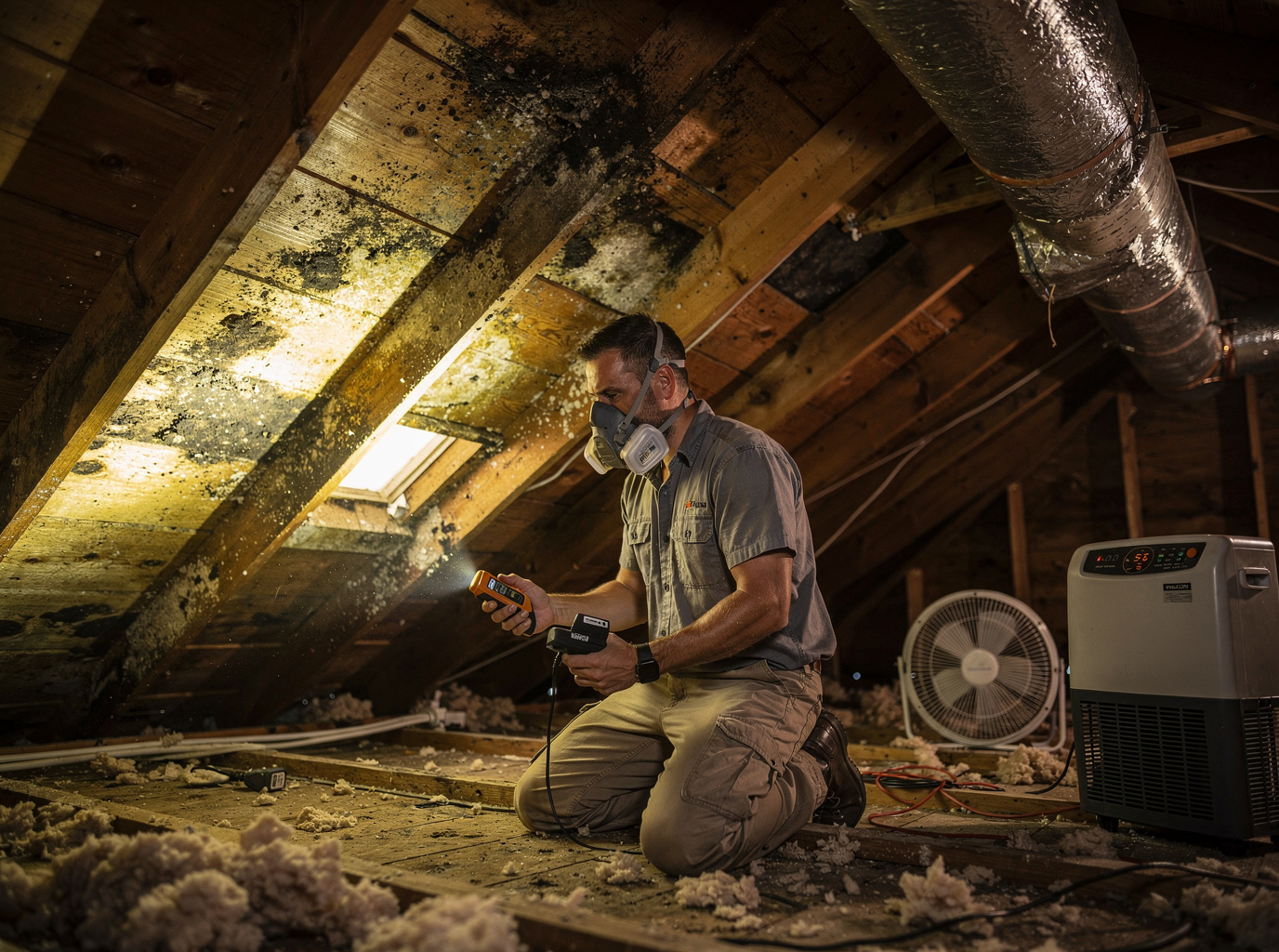
Yes, Florida humidity can and does cause mold in an attic when hot summers push indoor moisture upward and mild winters fail to dry out trapped air in Flagler County homes. Palm Coast sits in a humid subtropical zone where relative humidity often stays above 70 percent for months, allowing condensation to form on roof sheathing and rafters once attic temperatures drop at night. Homes in Palm Harbor, Indian Trails, and Matanzas Woods commonly experience this because many were built with standard fiberglass insulation and limited ridge venting that cannot keep pace with the local moisture load. The result appears as black or green growth on wood surfaces and insulation, especially after several consecutive days of high dew points near Flagler Beach or Washington Oaks Gardens State Park.
How Local Climate Patterns Feed Attic Condensation
Palm Coast summers bring daytime highs near 90 degrees with humidity that saturates outdoor air, and that same air infiltrates attics through soffit vents. At night, roof surfaces cool faster than the air inside, creating surface temperatures below the dew point and leaving a film of water on plywood. Mild winters in Flagler County keep temperatures in the 50s and 60s, preventing full drying cycles that colder northern climates provide. This steady moisture cycle repeats from May through October and explains why attic mold appears even in homes without roof leaks. Residents near Daytona Beach or St. Augustine report the same pattern because the regional weather systems deliver similar humidity levels across the county.
Why Ventilation Shortfalls Show Up First in Palm Coast Neighborhoods
Many single-story homes in Indian Trails and Matanzas Woods rely on passive soffit and ridge vents sized for older building codes that did not account for today's higher humidity. Bathroom exhaust fans routed into attics add another 5 to 10 gallons of water vapor daily during peak use, pushing moisture past insulation where it condenses on cooler rafters. Once growth starts on roof sheathing, spores spread through the insulation and settle into wall cavities. Homeowners notice musty odors strongest in the morning when attic air cools and sinks into living spaces. These conditions differ from drier inland counties and require targeted airflow fixes rather than simple dehumidifiers.
When Humidity-Related Mold Requires More Than Surface Cleaning
Surface wiping removes visible growth but leaves spores inside porous insulation and behind rafters. In Palm Coast homes, recurring mold after previous cleanups often traces back to unchanged ventilation rather than new leaks. Professional assessment checks for moisture content above 16 percent in wood members and measures airflow rates through existing vents. When readings stay elevated, full insulation removal followed by HEPA vacuuming and antimicrobial treatment on sheathing becomes necessary. Linking ventilation upgrades to remediation prevents the cycle from restarting during the next humid summer.
Continuing Your Research on Palm Coast Attic Mold
Homeowners who want deeper detail on root causes can review the article What Causes Attic Mold in Palm Coast Homes?. Those dealing with condensation specifically should examine Attic Mold From Poor Ventilation and Condensation to see how exhaust rerouting and additional ridge vents change outcomes. Properties near Palm Harbor often need the same steps outlined in Attic Mold After a Roof Leak: What Palm Coast Homeowners Should Do Next because humidity amplifies any small entry point for moisture.