
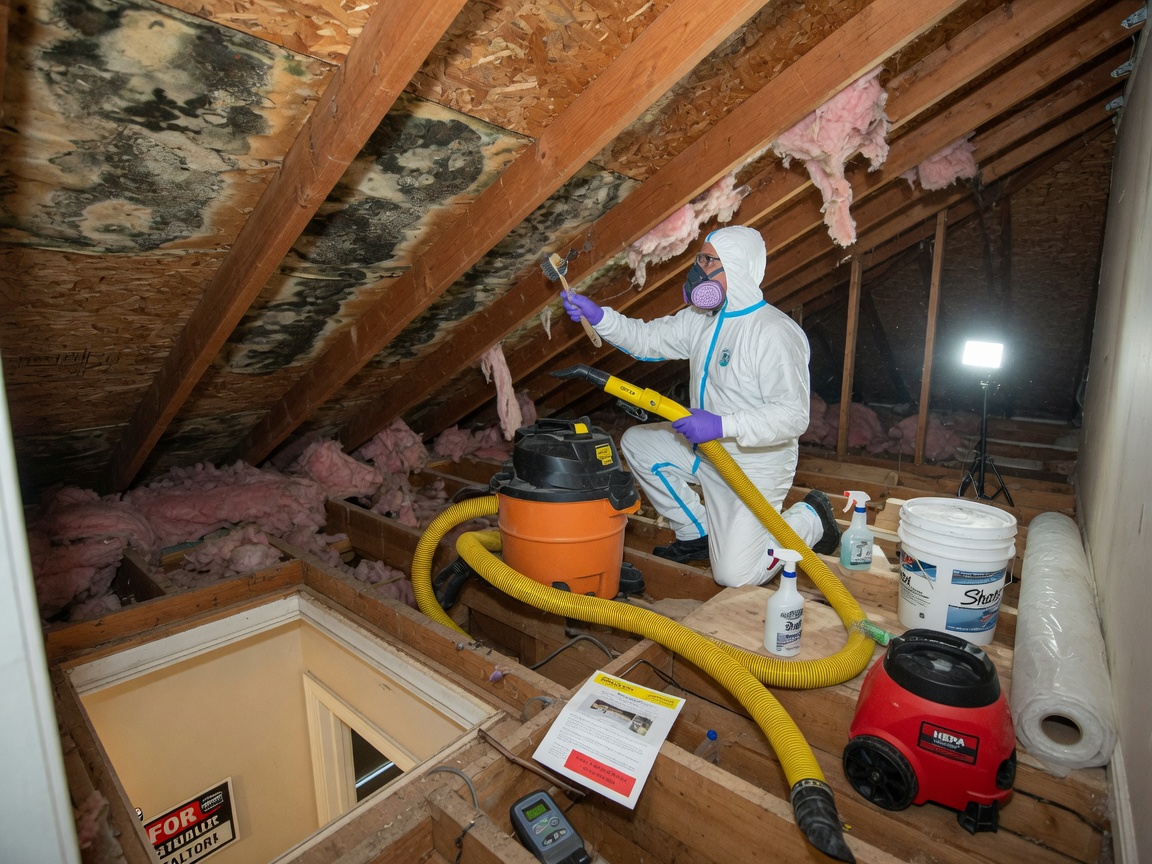
Palm Coast homes in neighborhoods such as Palm Harbor, Indian Trails, and Matanzas Woods often show attic mold during pre-sale inspections because of the humid subtropical climate. Hot summers drive roof deck condensation while mild winters keep moisture trapped in poorly vented spaces common in 1980s to early 2000s construction. When inspectors flag growth near ridge vents or above bathrooms, sellers need containment and removal that will not delay closing in Flagler County.
Remediation for listings requires negative air machines and sealed containment to keep spores from migrating into living areas during the process. In homes near Washington Oaks Gardens State Park or closer to Flagler Beach, salt air accelerates corrosion on metal HVAC components in attics, so crews check for hidden damage behind insulation before reinstalling. Removing affected drywall sections or rafter wraps must be documented for buyers and realtors who review reports from Daytona Beach or St. Augustine buyers.
Edge cases include mold hidden under blown-in cellulose that settled after roof leaks from summer storms. Technicians cut access ports only where needed, then treat sheathing with EPA-registered antimicrobials that leave no residue buyers will detect during final walkthroughs. Code notes in Palm Coast require proper attic ventilation ratios; crews note any deficiencies so sellers can address them without creating new moisture paths that restart growth before closing.
Technician insight
In Palm Coast the thing that catches most people out with Attic Mold Remediation for Home Sales & Inspection Findings is the way mild winters let roof deck condensation keep feeding mold in homes built before 2005 in Palm Harbor and Indian Trails. Sellers often think wiping visible spots is enough, but inspectors check behind insulation where the subtropical humidity has wicked moisture into the sheathing, and that hidden growth is what actually holds up closings.
Palm Harbor Listing Held by Attic Growth
A buyer inspection in a Palm Harbor home flagged black growth on rafters above the master bath. We set containment, removed stained insulation and treated the sheathing, then provided clearance samples. The seller closed on schedule after forwarding the report to the St. Augustine buyers.
Attic Mold Remediation for Home Sales & Inspection Findings Services We Offer
✓Pre-Sale Attic Mold Inspection
Detailed inspection of attics in Palm Coast homes flagged during buyer inspections, documenting growth locations and moisture sources for realtors preparing disclosure packets.
✓Containment and Removal for Listings
Sealed work zones with negative air pressure to prevent spore spread during removal, allowing sellers to keep showings on schedule in neighborhoods like Indian Trails.
✓Rafter and Sheathing Treatment
Surface cleaning and antimicrobial application on exposed roof decking and rafters in Matanzas Woods homes where condensation from the subtropical climate has caused staining.
✓Insulation Removal and Replacement
Extraction of contaminated cellulose or fiberglass in attics above living spaces, followed by new material installation to satisfy buyer inspection requirements before closing.
✓Post-Remediation Clearance Testing
Independent air and surface sampling after work in Palm Harbor properties to provide documentation that mold levels meet standards for real estate transactions.
Attic Mold Remediation for Home Sales & Inspection Findings Cost in Palm Coast, FL
| Service | Typical Range | What Affects It |
|---|---|---|
| Limited attic mold removal | $650–$1,200 | Small isolated areas under 50 sq ft with no insulation work |
| Full attic remediation for sale | $1,400–$2,800 | Larger growth across multiple bays plus containment and testing |
| Insulation replacement add-on | $0.80–$1.50 per sq ft | Cost scales with R-value and access difficulty in older Palm Coast homes |
| Clearance air sampling | $250–$450 | Independent lab report for buyer documentation |
Ranges are typical for Palm Coast, FL and confirmed with an exact written quote before any work starts.
How it works
- 1
Inspection Review
Examine buyer inspection reports and walk the attic to map visible growth and moisture readings in Palm Coast homes listed for sale.
- 2
Containment Setup
Install plastic barriers and negative air machines to isolate the work zone from the rest of the house during active removal.
- 3
Source Removal
Cut and dispose of affected materials, then clean rafters and sheathing with approved solutions while protecting HVAC components.
- 4
Clearance And Documentation
Perform final testing and supply written results that sellers can forward to buyers or agents in Flagler County.
Pricing
Pricing varies by attic size, extent of growth found during inspection, and whether insulation replacement is required.