
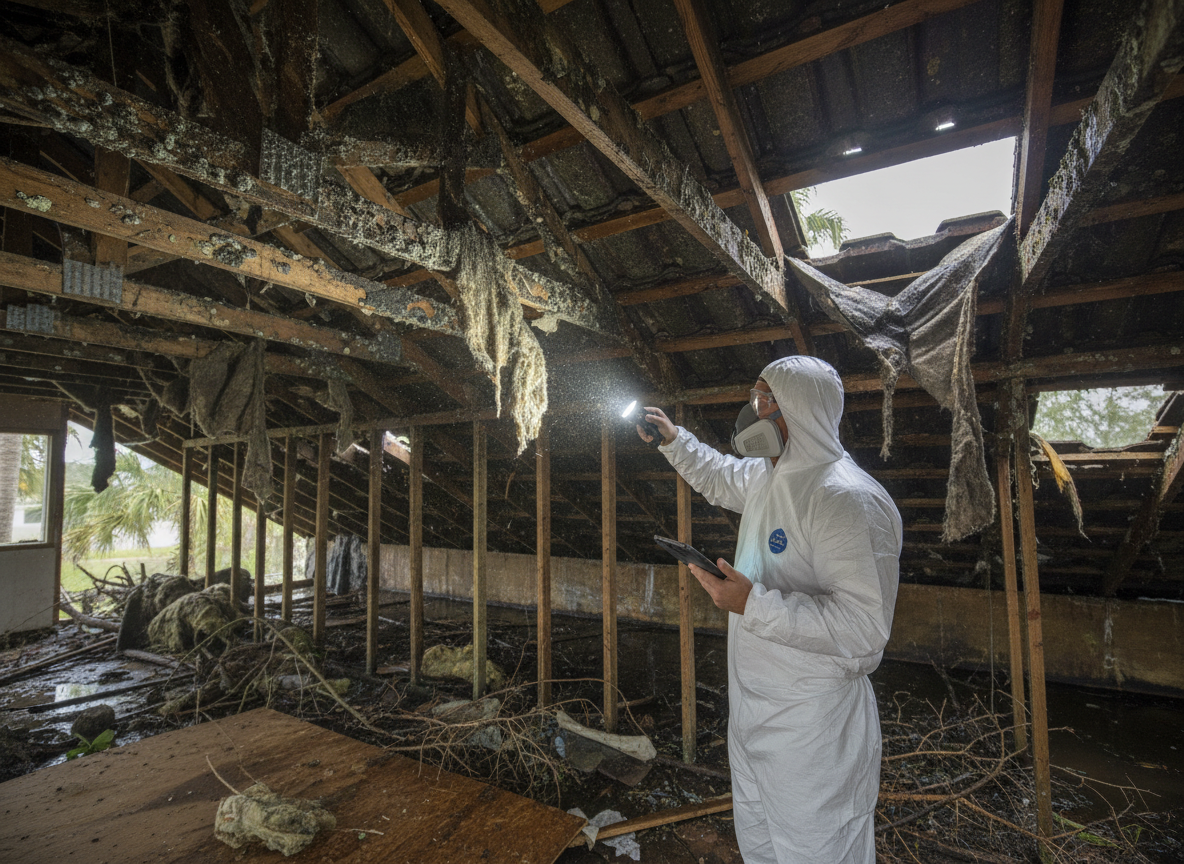
Palm Coast homes in neighborhoods like Palm Harbor and Indian Trails often feature truss roofs and fiberglass batt insulation installed from the 1980s onward. After a hurricane or tropical storm, wind-driven rain enters through damaged ridge vents or soffits, soaking insulation and creating hidden mold colonies within 48 hours due to the area's humid subtropical climate. Technicians must remove wet materials before mold spreads to drywall ceilings below, especially in single-story ranch homes common in Matanzas Woods where attic access is limited.
Flagler County building codes require proper ventilation ratios after repairs, yet many older homes near Flagler Beach still have undersized gable vents that trap moisture. Post-storm remediation includes HEPA vacuuming of roof decking and application of EPA-registered antimicrobials on plywood sheathing, followed by dehumidification to bring relative humidity below 50 percent. Salt air corrosion from coastal exposure accelerates rust on metal truss plates, requiring inspection of structural connections before insulation replacement.
Storms also deposit organic debris from Washington Oaks Gardens State Park oaks into attics via soffit breaches, feeding mold growth during mild winters when temperatures rarely drop low enough to halt spore activity. Crews use moisture meters on rafters and check for hidden leaks around plumbing vents that become active only during heavy rain events common between Daytona Beach and St. Augustine.
Homeowners in Palm Coast frequently discover the issue weeks later when musty odors reach living spaces. Proper containment with plastic sheeting and negative air machines prevents cross-contamination to finished areas during removal.
Technician insight
In Palm Coast the thing that catches most people out with Attic Mold After a Hurricane or Severe Storm is how quickly mild winter temperatures combined with trapped humidity under the roof deck let mold colonize plywood sheathing in homes built before modern ventilation standards, especially in Indian Trails where many soffits were never upgraded after earlier storms.
Storm-Damaged Soffit in Palm Harbor
Heavy rain from a tropical storm entered through torn soffits on a 1990s home in Palm Harbor. Inspection found saturated insulation along the north eaves and early mold on rafters. Crews removed wet materials, treated the decking, and ran dehumidifiers for three days until readings stabilized, allowing the homeowner to avoid ceiling repairs downstairs.
Attic Mold After a Hurricane or Severe Storm Services We Offer
✓Post-Storm Attic Inspection
Detailed moisture mapping and mold sampling in attics after hurricanes to locate water intrusion points in Palm Coast truss roofs before visible growth appears.
✓Wet Insulation Removal
Safe extraction of saturated fiberglass or cellulose insulation from attics in Indian Trails and Matanzas Woods homes following wind-driven rain events.
✓Hurricane Debris Cleanup
Removal of leaves, branches, and organic material that entered attics through damaged vents, preventing ongoing mold feeding in Flagler County properties.
✓Roof Deck Antimicrobial Treatment
Application of EPA-registered products to plywood sheathing and rafters after storm water exposure to inhibit mold regrowth in humid Palm Coast conditions.
✓Attic Drying and Dehumidification
Industrial drying equipment deployment to reduce moisture levels below 50 percent RH before new insulation installation in post-storm Palm Harbor homes.
Attic Mold After a Hurricane or Severe Storm Cost in Palm Coast, FL
| Service | Typical Range | What Affects It |
|---|---|---|
| Post-storm inspection and moisture mapping | $250–$450 | Larger attics in Matanzas Woods or multi-story homes increase time required. |
| Wet insulation removal and disposal | $600–$1,400 | Depends on square footage and whether blown-in cellulose must be extracted. |
| Full remediation package after hurricane | $1,800–$3,200 | Includes treatment, drying, and basic re-insulation for typical Palm Coast ranch homes. |
| Additional antimicrobial treatment | $300–$550 | Applied when salt air corrosion or heavy debris is present near Flagler Beach. |
Ranges are typical for Palm Coast, FL and confirmed with an exact written quote before any work starts.
How it works
- 1
Initial Assessment
Technician inspects attic access points and uses moisture meters on decking and insulation in the affected Palm Coast home.
- 2
Containment Setup
Plastic barriers and negative air machines isolate the work area to protect living spaces below from spores during removal.
- 3
Material Removal
Saturated insulation and debris are extracted and bagged for disposal, followed by HEPA vacuuming of exposed surfaces.
- 4
Treatment and Drying
Antimicrobial application and dehumidifiers run until moisture readings confirm safe levels for reinstallation.
- 5
Final Verification
Post-treatment inspection confirms mold absence and proper ventilation before homeowners return to normal use.
Pricing
Pricing varies by attic size, extent of water damage, and amount of insulation to remove after storms.