
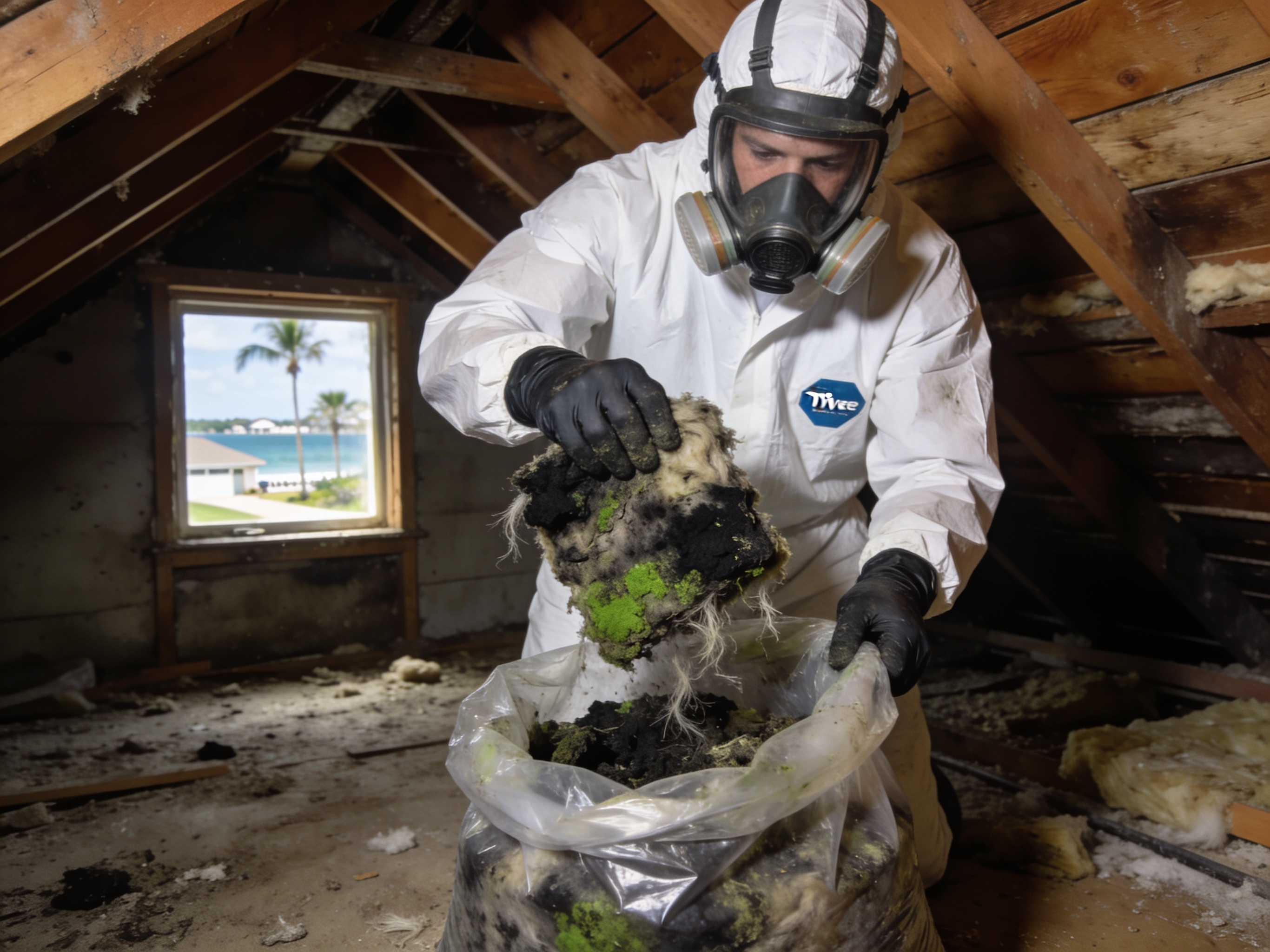
Palm Coast attics in neighborhoods like Palm Harbor and Indian Trails often contain cellulose or fiberglass insulation that traps moisture during the long humid season. Once mold takes hold, the material must be fully removed rather than treated in place because spores embed deep into the fibers and re-release when disturbed. Homes built near Washington Oaks Gardens State Park or closer to Flagler Beach face additional salt-air corrosion on fasteners and vents, which can create hidden entry points for water during afternoon thunderstorms.
Removal work requires full containment to keep spores from drifting into living spaces below, especially in single-story ranch homes common throughout Matanzas Woods. Crews use negative-air machines and sealed chutes to move contaminated material directly into lined dumpsters without crossing finished areas. Disposal follows Flagler County landfill rules for construction debris, and crews double-bag insulation to prevent truck contamination on the drive from Palm Coast toward Daytona Beach or St. Augustine routes.
Edge cases appear after roof leaks from hurricane season or when bathroom exhaust fans vent directly into the attic instead of through the roof. In these situations, insulation near the leak site is usually saturated while distant areas remain dry, so crews test moisture levels across the entire space before deciding how much to remove. Older homes may also have knob-and-tube wiring that must be worked around during extraction to avoid damage.
After removal, the attic must be left clean enough for new insulation without leaving mold food sources behind. This includes vacuuming rafters and sheathing with HEPA equipment and sometimes applying an antimicrobial coating where plywood shows staining. Skipping these steps often leads to rapid regrowth once humidity returns in late spring.
Technician insight
In Palm Coast the thing that catches most people out with Mold-Contaminated Attic Insulation Removal is how fast humidity from the Atlantic moves through vented soffits in older Palm Harbor homes; once cellulose gets damp it molds within weeks during our mild winters, and homeowners often miss the wet spots near the eaves until the odor reaches the living room.
Saturated Cellulose Near Roof Leak
A homeowner in Matanzas Woods noticed a musty smell after summer storms. Inspection showed water had entered through a flashing failure and soaked the cellulose along one rafter run. Crews contained the space, removed the wet insulation through a sealed chute, cleaned the sheathing and confirmed the area was dry before leaving.
Mold-Contaminated Attic Insulation Removal Services We Offer
✓Cellulose Insulation Removal
Complete extraction of blown-in cellulose that has absorbed moisture and developed visible mold growth in Palm Coast attics.
✓Fiberglass Batt Extraction
Careful removal of mold-covered fiberglass batts from rafters and ceilings without releasing fibers into living areas below.
✓Contaminated Insulation Disposal
Double-bagged removal and proper landfill transport of moldy material following Flagler County construction waste guidelines.
✓Post-Removal Attic Cleaning
HEPA vacuuming of rafters, sheathing and vents after insulation removal to eliminate remaining mold spores before new material is installed.
✓Moisture Source Identification
Inspection of roof leaks, vent issues and condensation points common in humid subtropical Palm Coast homes before insulation replacement.
Mold-Contaminated Attic Insulation Removal Cost in Palm Coast, FL
| Service | Typical Range | What Affects It |
|---|---|---|
| Small attic cellulose removal | $900–$1,600 | Single-story homes in Palm Harbor with easy hatch access |
| Standard fiberglass batt removal | $1,200–$2,100 | Indian Trails or Matanzas Woods homes with moderate mold coverage |
| Large or multi-section attic extraction | $2,000–$3,500 | Homes near Flagler Beach with added salt-air corrosion and deeper insulation |
| Disposal and landfill fees | $150–$350 | Varies with volume and current Flagler County rates |
Ranges are typical for Palm Coast, FL and confirmed with an exact written quote before any work starts.
How it works
- 1
Initial Attic Assessment
Technician enters the attic to measure moisture, identify mold extent and note insulation type in homes across Palm Harbor or Indian Trails.
- 2
Containment Setup
Plastic barriers and negative air machines isolate the work zone so spores do not enter living spaces during removal.
- 3
Insulation Extraction
Moldy material is removed through sealed chutes into lined containers for safe transport to the landfill.
- 4
Surface Cleaning and Drying
Rafters and sheathing are HEPA-vacuumed and dried before any new insulation is considered.
- 5
Final Walkthrough
Homeowner reviews the cleared attic and receives guidance on preventing future moisture issues in Flagler County's climate.
Pricing
Cost depends on attic size, insulation depth and access difficulty; onsite assessment provides the accurate range for each Palm Coast property.